Friday, 30 June 2017

Doing Retail On Amazon

Business is a risky endeavor. Sometimes you hit the jackpot, most of the time you don’t. And it is undoubtedly such a big market in America. Over 24 million people make money from retailing, so the competition is tough, to say the least. When you think of retailing, you often relate it to fashion and apparel when the truth is that almost all sorts of goods and services are provided by the retail industry. Examples of which are electronics, appliances, auto parts, food and even other aspects of skilled labor.
An entrepreneur can build a retailing empire in the world today because it is one of the fastest growing sectors in the market. As long as you can offer the consumers something they need or possibly want, you can make it big. Unfortunately, competition is tough as already stated above. Some risks pay off while others can lead to bankruptcy. Many physical stores are actually closing today because people rarely shop in malls these days. They prefer doing it online like almost everyone else does.

 Amazon recently posted its eighth straight quarter of growth. In fact, in the first quarter of 2017 its revenue grew by a jaw-dropping 23 percent, hitting net income of $724 million. Amazon Prime subscribership jumped to over 80 million members, representing a gravity-defying increase of 36 percent. And, while slowing marginally, Amazon Web Services, the company’s cloud computing cash cow, continued to post growth in the mid-40 percent range, giving Amazon plenty of cash to burn on furious innovation.

For one, Amazon continues to expand the capabilities of its Alexa Voice Service, the operating platform of its popular Echo digital assistant, a technology that not-so-subtly aims to disintermediate not only Google but every retailer on the planet from the consumer product search process, 55 percent of which already defaults to Amazon.

(Via: https://www.businessoffashion.com/articles/opinion/how-retail-stores-can-rival-amazon-doug-stephens)

Amazon sold apparel, shoes, appliances, and many other knick-knacks for a while now. Amazon has indeed mastered the art of online retailing. However, you’d rarely hear people bragging about how much they enjoy shopping on Amazon. Sure, you find a lot of great finds but it can be laborious and somehow stressful trying to look for a great deal in the vast assortment of products sold on Amazon. However, online shopping took out the fun in retail therapy that people used to love.

The arrival of Amazon will be an existential moment for some retailers and it will almost certainly trigger of wave of industry rationalisation. But it will also have a Darwinian flavour - a test of adaptive skills and survival of the fittest.

Since the US e-commerce giant last month formally announced its intention to expand in Australia, there has been a rash of analysis on the extent of the damage Cyclone Amazon will inflict on the retail sector, most of which has been extrapolated from its arrival in other countries.

For Australian retailers, the entry of Amazon will have a greater effect than the imposition of the goods and services tax or even the more gradual entry of online competitors.

A report from international ratings agency Standard & Poor's in May sums it up, saying "the tide of change that began with internet commerce has built into a tsunami called the Amazon Effect, resulting in bricks and mortar retailers shrinking their physical footprints while focusing on shifting more business online or risking being relegated to the remainder bin of retail history".

(Via: http://www.smh.com.au/business/retail/dark-days-for-retailers-as-cyclone-amazon-approaches-20170511-gw2tck.html)

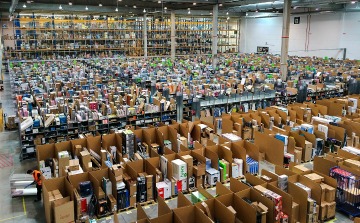
Amazon got retailing figured down to a science. If you think selling your own stuff by yourself is quite a challenge, selling through Amazon gives you a better chance of being seen by consumers and eventually making a sale. The network of retailers is vast (with over two million retailers – both big and small brands) and you can surely find something that will interest the consumers.

Getting your product sold is quite simple. Just list down your product on the site and consumers will likely find it there despite the long list of competition. Yet despite it all, businesses have been moving their products and making profits. Retailers can even opt for the Fulfillment by Amazon service where Amazon will do absolutely everything for retailers for a total hassle-free selling.

The following post Doing Retail On Amazon Read more on: IPAB


source https://ipaction.org/blog/doing-retail-on-amazon/

Monday, 26 June 2017

The Artistry Of Art Aloud

Most of us associate the arts to actual artworks and art pieces commonly seen in museums and parks. But what many are not aware of is that there are different forms of artistic expressions. The truth is that there is no limitation when it comes to the art. Artists are free to express their artistic talents and share them with the world. As the world becomes globally interconnected, we realize how diverse we all are in different aspects of life. An example of which is Art Aloud, an art to poetry collaboration.

While many of you probably haven’t heard of such a collab, it has been happening for ten years already in some states in the U.S. and even in other countries throughout the world. Artistic poetry is a great way to revive the interest and passion in poetry in a very artsy way.

The idea came into being thanks to Paul Dahlston and the Big Picture Discussion Group, a cadre of artists and thinkers who used to meet at the Business of Art Center (now the Manitou Art Center). Even after the group disbanded a few years ago, a few dedicated community members kept Art Aloud alive.

Cas Foste of Academy Art & Frame Company, who now organizes Art Aloud, says: “We get some really dynamic stuff, and we are totally all about collaborations, getting writers and artists to work together on pieces.”

Art Aloud began as a strict art-to-poetry collaboration, but over the years it has evolved to include all manner of written word, from quotes to short stories. Writing hangs alongside the artwork with which it’s connected (or, in some cases, is incorporated into the artwork) and weekly receptions throughout the month include a reading component similar to an open mic.

(Via: http://www.csindy.com/coloradosprings/art-aloud-celebrates-ten-years-of-poetic-artistic-collaboration/Content?oid=5058338)

During this coming Lent, artistic poetry is also a great way to relive the life of Christ. The Church regularly conducts this artistic poetry practice to remind all of the sacrifices of Jesus on Calvary and on the cross and His gift of salvation to the world. Aside from artistic poetry, you can also see many works of arts displayed in churches the world over housed in churches that are centuries old.

Experience Jesus’ last week through word, art and scripture at Christ the King Lutheran on Palm Sunday, April 9.

Worship services will be at 9 and 10:30 a.m. at 1301 Sebastian Blvd., Sebastian.

Special artwork by Sebastian resident Dave Sandgren and his mother Nancy Sandgren will be exhibited during the service. Each primarily black and white artwork will be unveiled as writings about it are read aloud. The art depicts Jesus last week on earth, from his triumphant entrance into Jerusalem on the lowly donkey to his death on the cross and then his glorious resurrection on Easter.

The special service starts outdoors with the processional gospel and the blessing of the palms.

Later in the week will be the Maundy Thursday worship service at 7:30 pm.

“The term ‘Maundy’ refers to Jesus' command to love as he shared his last meal with the disciples,” said the Rev. Karen Leedahl. Following Holy Communion, the service will conclude with stripping of the worship space of all adornment in preparation for Good Friday.

On Good Friday, Christ the King is offering the special Holy Week Experience. Participants can arrive anytime between noon and 5 p.m. to visit different meditation points. At each point there will be scripture to read, a question to contemplate, and/or an activity in which to participate. Seating will be provided at each stop. Worshipers proceed at their own pace.

(Via: http://www.tcpalm.com/story/specialty-publications/your-news/indian-river-county/reader-submitted/2017/04/05/special-artwork-enhance-palm-sunday-worship/100073218/)

The arts have a big impact on our daily lives even though many of us are oblivious to it most of the time. Nations have been formed greatly in part because of the influence of the culture and the arts and many great works of arts also serve as reminders of how people lived over the years. From cave paintings to sculptures, body art and body paintings and piercing, renowned artwork in museums, all these artistic expressions define society over a period of time and continue to do so until now.

Nowadays, you can go to museums to witness for yourself artwork made by great masters who have long been gone or more modern celebration of the arts through poetry in motion.

The Artistry Of Art Aloud See more on: https://ipaction.org/blog


source https://ipaction.org/blog/the-artistry-of-art-aloud/

Sunday, 25 June 2017

A Visual Appreciation Of The Arts

There is so much more to the arts than meets the eye. And for years, the arts have helped shaped the world in ways that you can’t imagine. Even until today, it has helped us understand the world that existed before us. We try our best to decipher what the images on ancient cave walls mean to give us a glimpse of the life led by our ancestors centuries ago. And these paintings might actually be the inspiration for visual artists to come up with their own various works of art today.

We see and appreciate beauty with our eyes. Whether it be an elegant painting, a striking sculpture, a unique photo, a moving video, or a breathtaking architecture, the visual arts is a rich expression of human talent at its finest. Dance, in my opinion, qualifies as well.

From a young age, we learn how to doodle even though we know so little about the spoken word itself. It only goes to show that this artistic talent is innate in us and a crucial aspect of human nature. After all, you don’t need to be brilliant to be able to appreciate the beauty of the visual arts.

Every two years, a curator comes to Venice with a mandate to rally the world’s greatest artists and unite them in a great enterprise on behalf of humanity. That may sound like a premise out of J.R.R. Tolkien, but it captures the heady, high-stakes spirit of the event, and the organizers rarely stint on ambition. In the past few editions, we have seen curators of the Venice Biennale use their Prospero-like powers to direct artists to tear down the wall between older art and the contemporary, to construct a marvelous portal to the collective unconscious, and to wage an insurgency against the unequal global status quo.

This year, under the direction of the highly accomplished French curator Christine Macel and energetically titled “Viva Arte Viva,” the project is slightly different. As Venice Biennale commissioner Paolo Baratta said when naming Macel to her post, she is “aware that we are currently living in an age of anxiety” and is “committed to emphasizing the important role artists play in inventing their own universes and injecting generous vitality into the world we live in.” With that aim, instead of sending her Biennale’s 120 artists off on an epic mission, she’s asking them to come together, settle down, divvy up the artistic labor, and go about their salutary business as citizens of a vibrant, functioning city-state of the mind.

(Via: https://news.artnet.com/art-world/venice-biennale-curator-christine-macel-interview-942749)

The culture and the arts depict the issues of the times since the artists themselves are aware of current events that are the cause of concern for the people. Most of the time, artists often use politics as an inspiration for their artworks and art pieces. Even though many people do not take the visual arts seriously, they actually have a big impact on society and help trigger necessary changes that are needed now.

When Canadian Inuit artist Kenojuak Ashevak sold her print “The Enchanted Owl” in 1960, she pocketed $24. When the piece was resold at auction in 2001 for nearly $59,000, she received nothing. That is because Canada does not recognize a resale right for visual artists, which in some other countries guarantees them a small percentage of proceeds from secondary sales.

Unlike musicians, writers and filmmakers – who receive royalties each time their works are sold, used or downloaded – painters and other visual artists in many countries are paid just once.

Like Ashevak, who died in 2013, they receive no proceeds from later sales, even when the value of their work balloons.

(Via: https://www.dailystar.com.lb/Arts-and-Ent/Culture/2017/May-04/404420-visual-artists-demand-their-fair-share-of-sales.ashx)

Unfortunately, visual artists rarely get the recognition or the monetary remuneration they deserve for their artwork unless they are big names themselves in the industry. Unlike in the entertainment sector where talents get royalties, most visual artists don’t receive anything aside from the amount initially paid to them upon the sale of the piece itself. It is why many visual artists get discouraged from pursuing their craft and go after traditional jobs that put food on the table instead.

Even appreciation for the arts is confined mostly to the elite who can afford to pay for such expensive artworks. The masses don’t usually spend their hard-earned money on pricey artworks only to be gawked at considering they can barely support their basic needs. However, it does not mean we don’t appreciate beauty once we see it. Thankfully, the visual arts have different aspects that the masses can relate to. There’s film, music, photography, and other decorative arts like woodworking, ceramics, and jewelry making that give meaning and more joy to our lives.

The following blog post A Visual Appreciation Of The Arts is courtesy of IPAction.org Blog


source https://ipaction.org/blog/a-visual-appreciation-of-the-arts/

Tuesday, 20 June 2017

Samsung Galaxy S8 Software Features

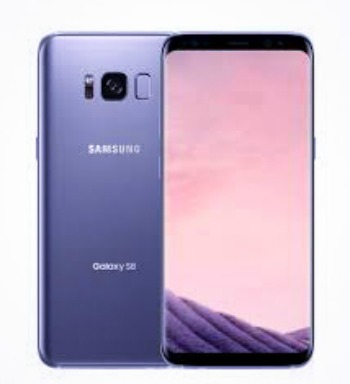
For the past ten years, smartphones have dominated the market and our lives. While Apple introduced the technology to the world, Android users have Google to thank for it. And one of the most popular smartphone brands in the world today is brought to us by Samsung. Just recently, the tech giant introduced its newest line of to-die-for smartphone gadget, the Samsung S8 and Samsung S8+.

The company has made various changes to the phone’s design and features over the years. And it seems that Samsung favors the curved display design that is seen in some of the previous Samsung Edge phone models. This new phone line is far different from models previously released by the company and is probably the reason why the tech industry is buzzing with excitement for its arrival. So, what sets apart the S8 and S8+ from the rest? Let us all find out.

Being handsets this ambitious, the Galaxy S8 and S8+ each have a well-stocked bag of tricks. Notable tidbits like iris/fingerprint/face recognition security, Samsung DeX (the ability to use the handset like a computer by connecting it to a screen and periphery), and Bluetooth Dual audio for streaming sounds to two separate headsets are niceties that push the Galaxy S8 and S8+ a level above the competition!
There's plenty more where that came from, so check out the complete list of key software features below. Are you hyped?

Always On display – View various information, such as a clock or calendar, even when the screen is off.

Multi window – You can run two apps simultaneously without changing the screen.

Edge screen – With various Edge panels, you can access frequently used features quickly and easily.

Hello Bixby – View frequently updated content, such as the weather, reminders, and alarms, in one place.

Bixby Vision (image search) – Bixby Vision is an image search feature that lets you search for relevant information conveniently.

Reminder – Schedule notifications and to-do items or use location reminders.

Bixby (intelligent voice assistant) – Bixby is an intelligent voice assistant that helps you use the device more conveniently.

Iris recognition – The iris recognition feature uses the unique characteristics of your irises, such as their shape and patten, to strengthen the security of your device.

Fingerprint recognition – A built-in capacitive sensor reads your fingerprint when you touch it from any direction.

Face recognition – Unlock the screen using facial recognition instead of drawing a pattern or entering a PIN or password.

Secure Folder – Protect your private content and apps in Secure Folder. Photos, memos, and apps in Secure Folder cannot by accessed by others.

Samsung Pass – Register your IDs and passwords for websites to Samsung Pass and verify your identity securely via your biometric data, rather than entering your login information.

(Via: http://www.phonearena.com/news/Samsung-Galaxy-S8-key-features_id92535)

Samsung’s new phone line reveals features that resemble that of iPhones and people are excited to finally have the Android version for some of these upgrades and others that have never been seen before. Many can’t also wait to get their hands on its sleek and sophisticated look. The absence of physical buttons on the front gives it a quite futuristic look and they have probably coined the term “Infinity Display” to describe it. Even the Samsung logo is no longer visible on the front for that completely seamless look. There may be flaws such as the set screen resolution, maximum brightness, and fingerprint reader location but they pale in comparison to what the phone offers.

Although the eyes of the world will be on the physical design of Samsung’s upcoming flagship, inside the Galaxy S8 and S8 Plus handsets the software continues to evolve to challenge assumptions and create better user experiences for millions of Galaxy smartphone owners.

A large part of that is the web browser. Samsung has continued to develop its own standards-compliant web browser for its Android platform. It already stands apart from Google’s mobile Chrome browser because of a focus on content blocking and privacy. You can now add secure mobile payments and better web app integration to those bullet points.

The latest major update to the browser (v5.4) is in the final stages of beta testing and a public beta version is rolling out in the Google Play store. And for the first time, it’s also going to be available for non-Samsung handsets as well.

Allowing the browser to run on Nexus devices may not significantly increase the reach of the browser to the public, but it does mean that many more developers can work with the features in the browser, confident that the reach of the Galaxy platform will reward them.

The browser is also bringing in another important part of Samsung’s mobile vision. It now supports web payments, allowing users to pay for goods and services directly in the mobile app. The intention is to enable web payment to use Samsung Pay if it is available on a device, otherwise card details can be stored on the handset with biometric sensors used for security.

(Via: https://www.forbes.com/sites/ewanspence/2017/03/14/samsung-galaxy-s8-software-browser/#3a5d44466387)

The Samsung S8 and S8+ are probably one of the coolest smartphones you can get your hands on these days. It boasts of a curvy and futuristic-looking screen display, is waterproof and offers wireless charging too. The user will likewise not get disappointed with its browser, which will serve as the benchmark for the next Android smartphones. With two of almost of everything, there is so much in store with this new eye-candy from Samsung.

While data recovery is a far too common complaint among computer and laptop users, smartphone users also face it too now and then. It just works differently because of the different features between computer hard drives and that of smartphones. When you face such a problem, don’t try to fix it yourself and visit an expert phone technician to retrieve it for you whether you are using an iOS or Android phone, an old model or one of the newer ones.

The article Samsung Galaxy S8 Software Features is courtesy of https://ipaction.org/blog


source https://ipaction.org/blog/samsung-galaxy-s8-software-features/

Saturday, 17 June 2017

Quality Education: Is Cloud Computing The Answer?

Technology is a beautiful thing. It allows us to do things we can only dream of as kids. But now that technological advancement have gone through the roof, are we really prepared to have this much technology in our lives? We already deal with so much technology use in our day to day. From school to work, we are glued to our computers or laptops for hours on end trying to get things done. Kids spend their free time watching videos on Youtube or playing with various gaming apps they have downloaded. You won’t often see kids playing outside anymore.

Now, as news of quantum computing is making its round on the web, we also wonder will this technology ever reach the schools too. It may take years from now before this technology reaches the public but the experts are already using the cloud to improve the quality of education.

When you think about a traditional school workflow, it's not unlike that of a business: paper is generated and moved in a systematic way between the children and the teacher. Just as cloud computing has transformed workflows in business to make them more collaborative and mobile, that same type of change has been coming to schools. Children and teachers use the power of the cloud to collaborate while accessing, storing, and sharing content.

As with business, this change is ongoing, uneven, and by no means complete. But if schools are at least partly about preparing children for the next generation of work, then the cloud needs to be a part of that preparation. Just as some businesses have struggled to transition to the cloud, schools face similar challenges. But because schools involve a specific demographic—children from a variety of abilities and socioeconomic and linguistic backgrounds—their challenges can be even more complicated.

As the paper trail lessens, there is less need to cut down trees and less worry for storage space among teachers. Teachers can conveniently store and access student files and papers on the cloud that can also be easily shared among other faculty members. The students, or their parents when necessary.

"We think the cloud has already been transformational in delivering technology to the classroom," Jordan explained. "When we started Knowledge Matters, we were literally shipping CD-ROMs to schools across the country. From a technology standpoint, as an educational software company, it was a huge challenge, as we had to troubleshoot network configurations for teachers [and other installation issues]."

Jonathan Rochelle, director of product management for Google Education, says that operational efficiency is just part of the cloud's advantage. "Teachers no longer have to take home a box of papers," he said. "They can provide feedback much faster, and they are spending more time with the students instead of [grading] papers."

(Via: https://arstechnica.com/information-technology/2017/03/cloud-computing-pushes-into-the-classroom-but-not-without-challenges/)

Not only has technology transformed the work of a teacher but the children too as homework can now be submitted online while at home or even allow students to take tests even when not in school. Students now have the option to study online if they want to.

I can’t put my hands on the thing right now, but I’m pretty sure that the Parenting Manual I was issued when my kids were born deemphasized the importance of keeping up with changes in the way they do things as they grow up. The worksheets and hand-written essays of their younger years have changed into collaborative work done online as they “matured” into high-schoolers.

Has it changed the work? Maybe less than it first appears. Technology may change human behavior, but it doesn’t really change human nature. Most kids don’t much like doing homework, and cloud services haven’t done a lot to change that. What’s interesting is that the kids, teachers, and administrators I talked to generally like the flexibility of using cloud-based classroom tools, but none of them think it has fundamentally changed classroom life.

We can’t deny the ease and convenience offered by technology to students and teachers alike. However, it also has its drawbacks. What if the student doesn’t have a computer at home? Will his/ her grade suffer? How can parents keep track of their kid’s school work when it’s directly shared to their teachers on the drive?

As far as parental involvement goes, Dahlstrom agrees with my gut feeling. “I do have the feeling that they (parents) are not as involved,” she said. “Parents used to be able to go through their kids’ bags to see the work,” which is no longer an option.

But the ultimate question is this: the comfort and enthusiasm of parents, kids, teachers and administrators aside, does all this technology actually improve the educational result? “I think it’s a net positive,” Dalhstrom said. “Not a drastic net positive. It hasn’t changed my pedagogy. If it all disappeared, my class would still be fabulous.”

(Via: https://arstechnica.com/information-technology/2017/03/cloud-changes-school-4/)

In everything we do, we need to find the perfect balance so it’s a win-win solution for all. The same principle applies when dealing with technology. Although we have integrated technology into our lives for quite some time now, it can still be overwhelming at times especially when you add priorities and time constraints in the equation. Studying is hard enough and technology may or may not work for some students, so administrators and teachers should be aware of this and offer alternatives so their grades don’t suffer or it beats the purpose of getting an education after all.

The following blog article Quality Education: Is Cloud Computing The Answer? was originally seen on https://ipaction.org


source https://ipaction.org/blog/quality-education-is-cloud-computing-the-answer/

Tuesday, 13 June 2017

Modern Living And Its Impact To Our Health

Much has changed over the decades and we owe most of it to technology. Cities are growing and life is becoming more complex. Gone were the days when technology did not make the world go round. Today, we can’t live without our smartphones and other gadgets. It allows us to stay connected to the world in real time. Most household chores can also be done in a snap because of innovative inventions like the dishwasher, washing machine, vacuum cleaner, and many others. There’s also no need to spend hours in the kitchen to whip up a delicious dish because you can just pop one in the microwave just like that.

Despite the benefits offered by technology, it has a major drawback – its negative impact on our health. We start leading a sedentary lifestyle as we continue to rely on technology to make life easy for us. We no longer have the time to stay in shape because we are too busy pretending to have a life online that we end up lacking sleep and neglecting our health and well-being in real life.

“We are the supremely arrogant species; we feel we can abandon four billion years of evolution and ignore the fact that we have evolved under a light-dark cycle,” says Oxford University’s Professor Russell Foster, who worked on the study. “What we do as a species, perhaps uniquely, is override the clock. And long-term acting against the clock can lead to serious health problems.” These problems include an increased risk of cancer, heart disease, type-2 diabetes and obesity. 

“Under-sleeping is the next sugar – it’s a health time bomb,” says Dr Gottfried, who says just about every aspect of modern living is stealing our sleep. “Our lives are more hectic than ever, more people live in cities where they’re less attuned to light-dark cycles, we binge-watch TV shows, tablets emit sleep-disrupting blue light all evening, and it’s become normal for our bosses to email us at 9pm (they never could 20 years ago). What it means to be available has changed and our sleep is suffering. 

(Via: http://www.telegraph.co.uk/women/health/bad-nights-sleep-really-does-body/)

Our obsession is just one of the reasons why we lose sleep and it could prove disastrous to our health. The lure of a better life drives more people to flock the cities and create an even more complex urban jungle than before. And to accommodate the burgeoning city population, more and more rural lands are converted as the city keeps on expanding throughout the years. City life messes with your body’s normal circadian rhythm and exposes your body to all types of pollution on a daily basis. As a result, the population gets sicker and more likely to suffer from chronic and debilitating conditions for the rest of their lives. Or worse, kids are born with congenital anomalies or deformities that have severely hampered what they can achieve in life.

Scientists have long considered the lungs as vulnerable to air pollution. Only recently have they come to realise the role of the nose as a pathway to the brain; the extent of the nose-brain connection was only illuminated in 2003, when researchers in smog-choked Mexico City found brain lesions on stray dogs.

Unfortunately for city dwellers, the closer we live to these roads, the higher our risk of autism, stroke and cognitive decline in ageing, although the exact reasons haven’t been teased out. Scientists suspect it has something to do with fine particles causing tissue inflammation and altering gene expression in the brain’s immune cells.

Moreover, city life can put you at risk of mental conditions that are widely frowned upon by most societies.

Research has shown that people who live in cities may suffer more psychological stress than people who live in rural areas. For a study published in Nature in 2011, Jens Pruessner and colleagues at the Central Institute of Mental Health in Mannheim found a 21% increase in anxiety disorders, a 39% increase in mood disorders and a doubled risk of schizophrenia in city dwellers. Urban living was linked to increased activity in the brain’s amygdala – the fear centre – and in the perigenual anterior cingulate cortex, a key region for regulating fear and stress.

(Via: https://www.theguardian.com/commentisfree/2017/mar/13/warning-living-city-seriously-damage-health)

Now that the statistics are out there and people are aware of the repercussions of modern life to our health, does the government have any plan on how to halt its progress and take care of the health of its people? But since there will be major budget cuts in this new administration and the possibility of the Obamacare repeal, can the citizens expect any help from the government to help them when they need it the most?

The CDC, the National Institutes of Health and other government agencies had been hoping and pressing for more money to develop drugs, tests and vaccines and to look harder for where those germs might be lurking. "We really are in a different time. This is the moment for us to really invest," Schuchat said.

In fact, they had been pressing for an authorized fund that would let them move quickly against new diseases, outbreaks or other threats without having to go to Congress to ask for the money.

Now, instead, they are looking at cuts and a Congress controlled by the same Republican leadership that, worried about slush funds and wasteful spending, delayed funding to fight Zika for nine months. They finally cut the funding request nearly in half.

(Via: http://www.nbcnews.com/health/health-care/new-gop-health-care-bill-would-cut-fund-fight-killer-n730391)

It is the time to assess our choices and determine if the life we are living is indeed the life we deserve. One can only hope that whatever changes that are still coming our way would be for the best interest of the majority especially when it comes to the delivery of basic services like health care. A budget cut is not always the answer to many of the U.S.’s most pressing issues nowadays but perhaps the proper allocation of the nation’s budget can help a lot and some major lifestyle changes to boot.

Modern Living And Its Impact To Our Health was first published to IPAction.org


source https://ipaction.org/blog/modern-living-and-its-impact-to-our-health/

Monday, 12 June 2017

It’s Not Yet Too Late To Save The Environment

The planet is hurting. It’s too obvious for everyone to see yet many of us turn a blind eye to these drastic environmental changes that are happening everywhere. Even other species on the planet are suffering and many have been completely wiped off from the face of the planet never to be seen again after becoming extinct. However, we are too obsessed with the latest trends and with social media that we rarely give the time of day for these more pressing environmental issues.

Environmental protection and conservation are a must because it is our responsibility as the most superior species on the planet (and the ones that also caused the most destruction). Earth is our only home. We haven’t fully explored yet the possibility of living in another planet nor even found one that is as hospitable as ours. Then, there’s climate change that makes life more challenging for many of us. The heat is trapped on the planet and it is affecting major weather systems and has sped up the melting of polar caps, for instance, which can decimate many island nations in a few year’s time.

Predictions for a planet affected by climate change can sound like they're ripped from a doomsday novel: stronger hurricanes, intense heat waves, rising sea levels and the disappearance of ice in the Arctic.

And scientists have seen some of those changes already taking place, according to NASA.

Climate change — as well as other environmental issues like deforestation and wildlife extinction — have the potential to be scary for children. The implications of climate change can contribute to stress, depression and anxiety for everyone, but especially for kids, according to a study released this year by the American.

(Via: https://www.usatoday.com/story/news/nation-now/2017/05/22/climate-change-predictions-can-scary-kids-what-can-you-say/335505001/)

It is true that we may be the reason to our own undoing yet we can still prevent that from happening because we still have time left. In your own little way, you can do something that will benefit the world in the long run even if it is just turning off the tap when brushing your teeth, recycling your trash, using less light at night or using public transport instead of taking your own car to work every day.

We need to move beyond thinking about the environment—our land, water and air—only as a source of inputs for the food system. Instead we need to recognize that global environmental changes can diminish yields, reduce the amount of food we produce, and affect how nutritious it is and where we produce it.

But just how does the experience of change prompt food systems actors and institutions to work toward solutions?

Weather extremes and environmental shocks, for instance, will likely occur more frequently in the future. In California, the multi-year drought and recent lifting of the drought emergency after a heavy rain and snow year has had a cascade of lingering effects, calling for greater management of both extremes and making water conservation “a way of life” by executive order. The four objectives of California’s new management plan include educational and policy nudges such as using water more wisely, eliminating water waste, strengthening local drought resilience and water holding capacity, and improving agricultural water use efficiency and drought planning.

(Via: https://blogs.scientificamerican.com/observations/feeding-a-hot-hungry-planet/)

Sustainability is the goal but we are a long way from there now. The world’s population is growing but the resources are receding. How will we be able to grow food if the water supply is dwindling? People will get hungry and many will die that’s for sure. Moreover, natural calamities are also worsening because of climate change.

As global temperatures continue to rise, the consequences of climate change are becoming more apparent. Scientists can collect data on the rates at which ecosystems are changing to gain insight into the effects of climate change, and then apply their findings to infer what ecosystems may look like in the future. However, this can be an incredibly daunting task for a scientist, considering the dynamic nature of the environment. On-the-ground observation alone is not always enough to effectively monitor a given environment’s rate of change–this is where drones come in.

Drones have become increasingly popular for recreational use, but entertainment is not their only application. Some organizations use drone technology as a resource for conservation efforts. Drone expert and main editor of the blog MyDroneLab Jack Brown has identified several organizations that are working to monitor climate change impacts with drones.

Maldives: mapping sea level rise

Sea level rise is the everyday reality for this island nation. Citizens must consider the risk of flooding every day. A project to create a 3D map of the Maldives was initiated by an agency within the United Nations Development Programme who joined forces with DJI, a leading drone manufacturer. Using drones, they were able to map the island nation in a few months, a task that would normally have taken years. Time is of the essence in the Maldives, where 80% of the islands are threatened with submersion.

(Via: https://www.islandconservation.org/drones-climate-change-science/)

Saving the world should be everyone’s responsibility. We pale in comparison to the wrath of nature once it strikes. We don’t want the time to come when the world is no longer hospitable for mankind. There is a lot of work involved for us to salvage what’s left of nature and there are basically two ways to doing it. First is to take an active part in environmental conservation efforts such as tree planting and second is to avoid doing unfriendly environmental practices like wasting energy and polluting the environment. There is more work left to be done, so we should all unite for this common cause for the common good.

The following blog article It’s Not Yet Too Late To Save The Environment See more on: The IPAC Blog


source https://ipaction.org/blog/its-not-yet-too-late-to-save-the-environment/